A Private Family Archive
Your family's story,kept in the family.
The Family Lines turns your family's photographs, documents, recorded voices and family tree into one private, invite-only archive — built to be used at the kitchen table, not mined for data.
Tap any name in your family's tree and this card opens — their photographs, dates and people. (Example shown.)

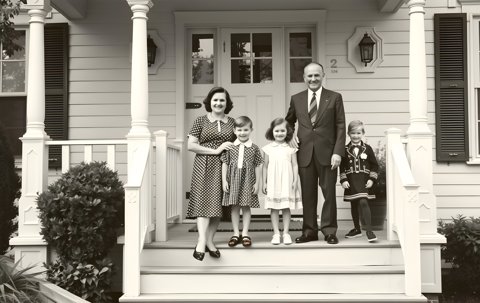
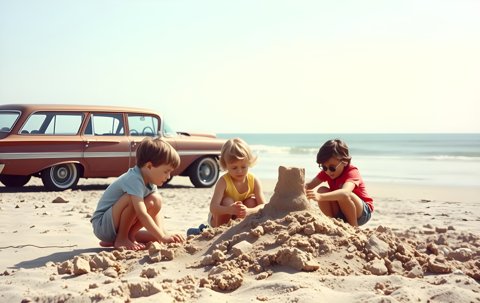
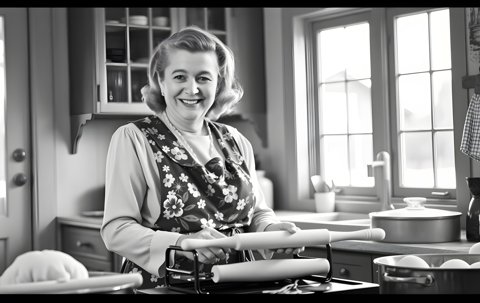
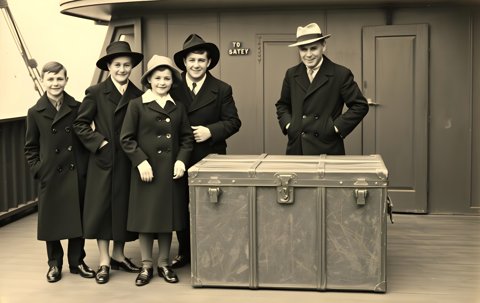
Every photograph finds its people, and every person becomes a life — pictures, dates, places and voices connected to a tree your relatives can actually click. (Illustrative demo shown — real family archives are never public.)
Built for our own family first
The Family Lines didn't start as a product. It started because one family's photographs were scattered across three states, the voices that could name the faces were getting older, and no subscription website felt like a safe place to put any of it.
So we built the archive we wished existed — and filled it.
The founding archive today — grown from shoeboxes, ship manifests and ten-minute voice memos.
What's inside
An interactive family tree
Click through the generations. Every person has a profile — dates, places, photographs and the people they belonged to.
A photo & document archive
Scans, certificates, letters and albums, organised by family line and searchable by name, place and year. Every version of every file is kept.
Recorded voices
A photograph nobody can identify is a puzzle; a photograph with a voice attached is a story. Voice memos live beside the pictures they explain.
AI that helps, privately
Face-matching suggests who's in an unlabelled photo and drafts descriptions — on our own servers, never a third-party cloud, and only saved once a relative confirms.
Corrections, not chaos
Any relative can suggest a fix — a date, a spelling, a missing cousin. Nothing changes until your family's curator approves it.
Backed up and exportable
Nightly snapshots, deleted files recoverable, and your whole tree exportable in standard GEDCOM format whenever you want it.
How it works
- We set up your family's archive. Your own private space, your family lines, your invitations — nothing shared with any other family.
- Relatives add what they have. Shoebox scans, phone photos of old prints, documents, ten-minute voice memos. Badly named is fine; there's an inbox for "no idea where this goes".
- The archive organises itself around people. Tagging connects photographs and recordings to the tree, so every profile slowly becomes a life — and the whole thing becomes the family book nobody had time to write.
Private is the product
Most family-history sites are research databases with a business model attached: your tree feeds their search index, your DNA feeds their partnerships, your photos feed their machine learning. The Family Lines is deliberately none of that.
Invite-only
No public profiles, no search engines, no strangers. Your family decides who's in.
No data mining
No ads, no selling, no "partners". The archive is the product — families pay for it, so families are not the product.
Yours to take
Original files plus a standard GEDCOM export, any time you ask. Leaving is allowed to be easy.
Questions families ask
Is our family's material public?
No. Nothing in a family's archive is public, searchable, or visible to anyone your family hasn't invited. Every account is created by invitation, and each family's archive is separate from every other's.
How is this different from Ancestry or MyHeritage?
Those are research databases — you pay a subscription to search records other people hold. The Family Lines is the opposite: a private home for the material your family already owns. Your photographs, documents, recordings and tree live in one place your relatives can actually use, and they are never pooled, sold, or shown to strangers.
What does it cost?
The Family Lines is in early access. Founding families get hands-on setup — we build the archive with you — and pricing shaped with them before public plans exist. Join the waitlist and we'll reach out when a spot opens.
How does the AI tagging work?
Face-matching and photo descriptions run on our own private servers — not a third-party cloud — and they only ever make suggestions. Nothing is saved to the archive until a relative confirms it.
What if we want to leave?
You take everything with you: your original files exactly as uploaded, and your family tree in standard GEDCOM format that any genealogy software can read. No lock-in, ever.
Who is behind it?
The Family Lines is a product of SEMPITE, the New York digital consulting studio founded by Jacob Gerrish — who built it first to preserve his own family's history. It now holds hundreds of relatives across centuries of records, and founding families work with Jacob directly.
Founding families
We're opening The Family Lines to a small number of families at a time, so each one gets a properly built archive — not an empty login. Tell us a little about yours and we'll reach out when a spot opens.